

I expected that I could neatly do a post about each of the Franciscan vows. The more I read about Franciscan spirituality, though, it became clear that this would be an impossible task.
Poverty is at the center of everything related to St. Francis. So, we’re not going to try to rush through this topic. Instead, we’ll have a few posts related to different elements of poverty in Franciscan spirituality, and then we will make sure that poverty is at the core of our content on this journey.
This will include:
How Franciscans define poverty.
The call to solidarity with people in need.
Tackling systemic poverty.
Solidarity Stories – an ongoing series where we hear from people about their work with people in need, and what we can learn from them.
What questions do you have about poverty? What stories do you want to hear – or tell? Leave us a comment or shoot us an email.
What Franciscans really mean by poverty
When the United States government talks about poverty, they mean $15,960 in income per individual or $33,000 in income for a family of four. It’s focused on a concrete, material outcome.
The spiritual poverty of the Franciscan friars and sisters is quite different. The solemn vow of poverty is a voluntary form of poverty that is freely chosen. It means that the vowed Franciscan does not own anything. This is less about a legalistic approach to material goods and more about relationships:
Relationship with and imitation of Jesus’s own poverty.
Relationship and availability toward other people.
Depending on God for their needs.
As William Short, OFM says in his 19th lecture on the life of Saint Francis, “The purpose of Franciscan Gospel or evangelical poverty is not that I should be impoverished. That’s not the focus. The focus is rather on the other – that the other should be enriched. That the one who has less should now have more because I have given what I have.”
Franciscan poverty does not lionize material poverty. Short says, “Franciscan poverty, far from blessing economic impoverishment of others, stands as a protest against it, and it stands as a radical protest against any form of private ownership of the gifts of God.”
To live a life of poverty is to live free from possession or the desire to possess. This applies to more than just money, and can apply to things like our titles, our knowledge, and anything else that we feel attached to in place of feeling attached to God. We are called to give away our gifts and share them.
The story of original sin is, indeed, the story of wanting possession of something – the apple in the garden – rather than trusting in God. Short says, “As soon as we begin to draw a line around what is mine and what is yours, in a Franciscan way of looking at things, we have the beginnings of violence.”
Imitating Christ
Bob Burnham, a secular Franciscan, writes, “[Francis] embraced poverty not out of idealism. Francis embraced poverty because Christ did. Francis recognized that by becoming human in the form of Jesus, God had ‘made Himself poor in our world.’ If he was going to imitate Jesus Christ in all things, Francis reasoned, he would have to imitate Christ in his poverty.”
Dependence on God and each other
Ilia Delio, OSF writes about the ways that Francis and Claire both saw a spiritual value in being dependent on others. They believed it revealed God’s Goodness: “When we allow others to do things for us, God’s goodness shines through them. Poverty is not so much about want or need; it is about relationships. Poverty impels us to reflect on our lives in the world from the position of weakness, dependency, and vulnerability.”
This allows us to offer ourselves to each other in a fuller way, and to seek to be in communion with each other rather than possess each other or use each other for material gain.
What this means for Franciscans
Franciscans themselves own nothing. They don’t have personal bank accounts. Everything they receive belongs to the friary. While Franciscan orders do own property and don’t quite live the day-to-day experience of poverty exactly like Francis did, they aim to live simply in their communities. Just how literally to take Francis’s rule of poverty has been a source of division throughout history — between the Holy See and the Franciscan orders and between Franciscan orders themselves.
What this means for us
You may not have taken a religious vow of poverty. I haven’t! Does that mean we are off the hook? You can guess my answer…No.
Throughout this journey together, I plan to ask some priests and lay brothers and sisters about the proper economic orientation lay people should have toward poverty. For now, though, our marching orders from the vow of poverty are clear:
We should consider the ways that we draw our own lines of what is “mine” and what is “theirs”. What are we overly attached to in our own lives – whether that is material goods, our own pridefulness, our fear of having or being enough, our title at work, our standing in the community, whatever – in a way that makes it harder for us to be in a truly generous relationship with other people? God is probably not calling each of us to give up our homes or our careers. But he probably is calling us to a healthier relationship with all of these things.
When we make less space in our hearts for things, we can push aside our pride and make room for humility and love. That is the path to a stronger relationship with God, each other, and ourselves.
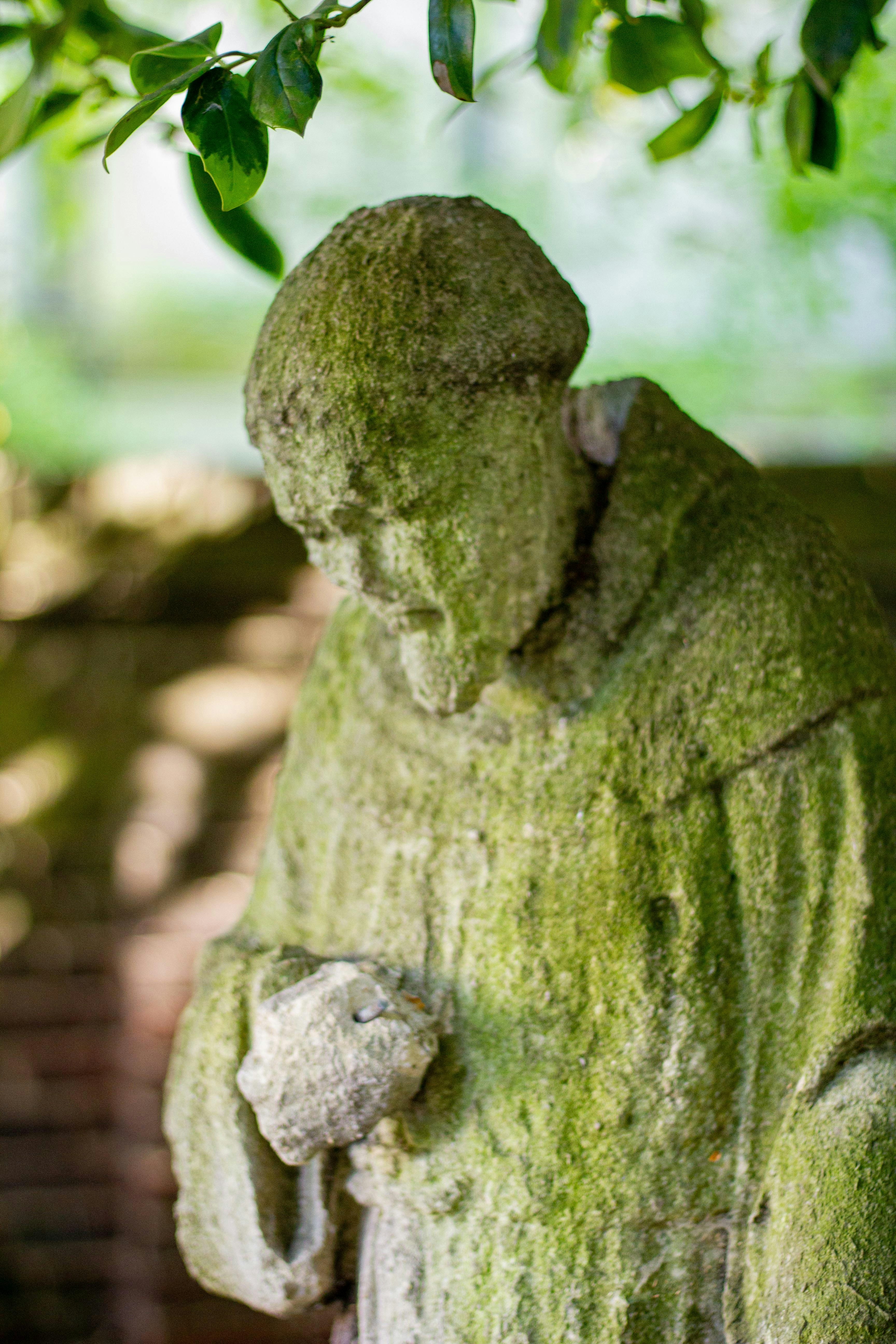
Photo by IP Withers on Unsplash